Author: jiajings119
Hi Nicole, I really liked how you connected the video on poetic devices to an interactive learning design. The idea of moving beyond just watching the video to having students actually try writing their own poems is such a good way to turn theory into practice.
I also thought your point about adding captions and giving students different ways to respond (notes, discussion, or oral sharing) was really important. It shows you’re thinking about inclusion from the start, not just as an afterthought.
One thing I was curious about: if you wanted to make the activity even more interactive, could students share their creative pieces with peers and give each other feedback? I think it might add another layer of engagement and help them see how others use poetic devices differently.
Your post gave me some ideas for my own resource—I’m working on resilience and stress management, and I realized I could also add short creative reflections or peer sharing to make it more engaging. Thanks for the inspiration!
Hi Isaac, I really like your post on using pedestrian crossing design—with its countdown timers, accessible buttons, and auditory cues—as a metaphor for inclusive learning. That was such a creative way to build a tangible connection between universal design in civil engineering and educational environments!
Your idea of pre-learning activities offering a “head start” (similar to the early signal for pedestrians) is particularly smart—it allows learners to ease into a topic and build confidence before diving deeper. Also, framing lecture transcripts or audio narration like auditory cues in crossings is a great nod toward accessibility and flexibility.
I have been thinking about how these design concepts might be implemented in remote or hybrid learning scenarios. For example,
could a digital countdown feature be added to self-paced modules—a timer or progress indicator to help students manage their learning pace, while also providing options to pause or extend the duration?
Your analysis makes me reflect on my own work—especially on designing resilience learning for academic stress online. I’d love to explore how I might lean into these pedestrian-inspired UDL principles in my modules, too!
Hey Hans! I really liked your post! I think choosing cyberbullying and mental health as your focus is super relevant—it’s something most of us have probably seen or even experienced in some way. I thought it was smart how you connected open pedagogy with giving students a chance to actually create something meaningful, like campaigns or posters, instead of just reading about the problem. That makes the learning experience way more authentic.
I also thought the idea of letting students submit anonymously (or in groups) was a really thoughtful touch. It shows that you’re thinking about the emotional side of the topic, not just the academic part. It made me wonder—if students are creating things like social media campaigns, could there be a way for peers to give feedback to each other? I feel like that could help build more empathy, and also give everyone more perspectives on how to respond to cyberbullying.
Thank you for sharing! After reading your post, it get me to think about how I could make my own project on resilience and academic stress more student-driven, too.
Hi Anna! I really enjoyed reading your reflection on behaviorism, cognitivism, and constructivism—your personal examples (field hockey drills, French mnemonics, and the recipe book capstone) make the theories so relatable. The way you describe learning through behaviorist repetition, cognitive structuring, and constructivist passion projects really brings those theories to life.
Your embedded video (“Every Major Learning Theory Explained in 5 Minutes”) was a great touch—succinct and helpful. I’m curious: which of these approaches resonates most with how you prefer to learn? And when designing instruction for others, is there a theory you lean into more naturally (or one you find most effective to blend)?
Thanks for sharing. You did a great job!
When designing our interactive learning resources on Resilience and Academic Stress Management, our initial goal was for students to learn within a collaborative and supportive classroom environment. However, if the unexpected events happened, it can quickly disrupt these plans, such as the COVID-19 pandemic. When events occur that require student to switch from classroom learning to home learning, our primary task is to ensure that they can still participate in learning in a meaningful and successful way. So let’s see how we can do!
How can you adjust your planned learning activities to meet the needs of your learners if an unexpected event occurs?
To facilitate successful home-based learning, we will utilize convenient tools such as Zoom for online instruction, including classroom teaching and group discussions via Zoom, as well as collaborative note-taking using Google Docs. Since not all learners are familiar with these tools, we will provide brief video tutorials and step-by-step guides before requiring students to use them. These resources will be available in both video and text formats to accommodate different learning preferences and ensure accessibility.

One of the activities we have designed is for students to reflect on their personal coping strategies. In an online teaching environment, this can be achieved through written journals, voice recordings, or short video submissions, providing learners with multiple ways to express themselves. This flexibility aligns with the “multiple actions and expressions” principle of UDL (Universal Design for Learning), allowing students to choose the format that best suits their abilities, comfort level, and home environment.
This week’s reading material made me realize that removing barriers benefits everyone, not just students with special needs. For instance, providing transcripts of recorded lectures can assist students with hearing impairments, English language learners, and anyone who needs to review the content later. Similarly, breaking down courses into shorter segments with clear objectives can help all learners stay focused.
Ultimately, unexpected events test not only students’ resilience but also our instructional design. By planning for flexibility, offering multiple ways to participate, and proactively reducing barriers, we ensure that learning is fair and meaningful for everyone. This approach itself embodies resilience: when challenges arise, we choose to adapt rather than give up.
Reference:
Building your resilience. (2020). American Psychological Association. https://www.apa.org/topics/resilience/building-your-resilience
Building resilience to manage unexpected challenges in international teaching. (2025). Powered by Schrole. https://www.schrole.com/news/building-resilience-to-manage-unexpected-challenges-in-international-teaching/
With Group member: Hoaxing Tu & Links (Huilin) Luo
Overview
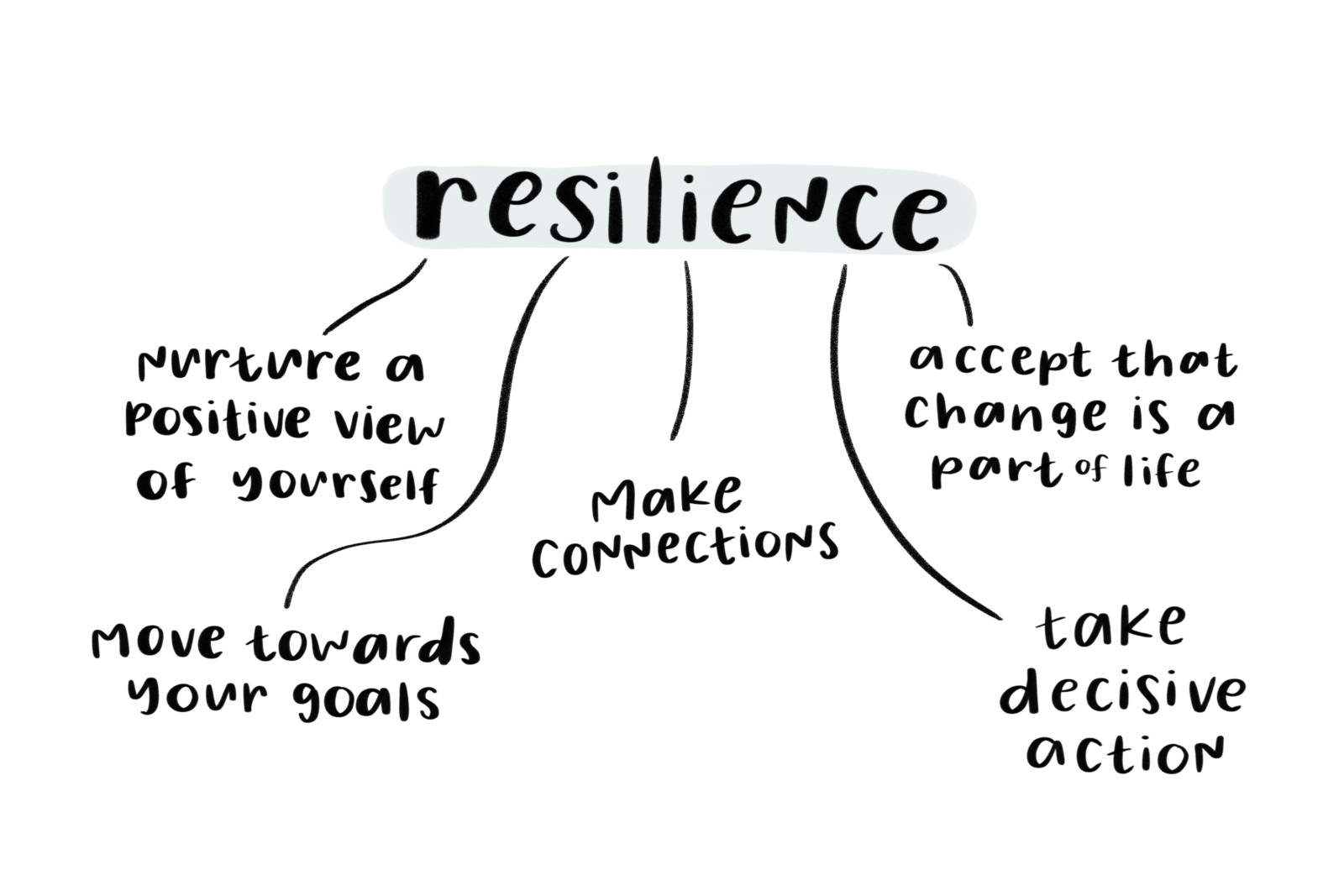
Definition of Resilience
Resilience refers to the ability to adapt, recover, and maintain well-being when faced with stress, adversity, or change. Scholars define resilience as a dynamic process involving protective factors that enable individuals to cope effectively with challenges (Turyamureeba, 2034). In terms of learning, resilience helps students maintain their academic performance and mental health when faced with pressures such as deadlines, exams, and personal responsibilities.
Purpose
This resource aims to provide strategies for identifying sources of academic stress for students in higher education, helping them to practice stress management techniques and develop personalized stress management plans.
Learning Context & Learners
- Target Learners: College and University students, aged 18 to 25
- Educational Background: Most are undergraduate students from diverse fields of study, like social sciences, business, engineering, and humanities. They are all at an important transitional stage in their live, facing academic, social, and personal pressures.
- Lifestyle & Interests: Many students need to balance multiple roles: attending classes, completing assignments, preparing for exams, which also have part-time job or extracurricular activities.
- Prior Knowledge: Students generally recognize stress and can identify common triggers such as deadlines, exams, or group projects. But they often lack structured coping strategies.
- Special Learning needs: For some students (international students), English is their second language, so the resource will present in clear and concise language and uses multiple formats, such as text, visuals, and audio.
Learning Theory & Design
This learning resource is based on constructivist learning theory, which emphasizes that learners actively construct knowledge by combining new information with existing experiences.
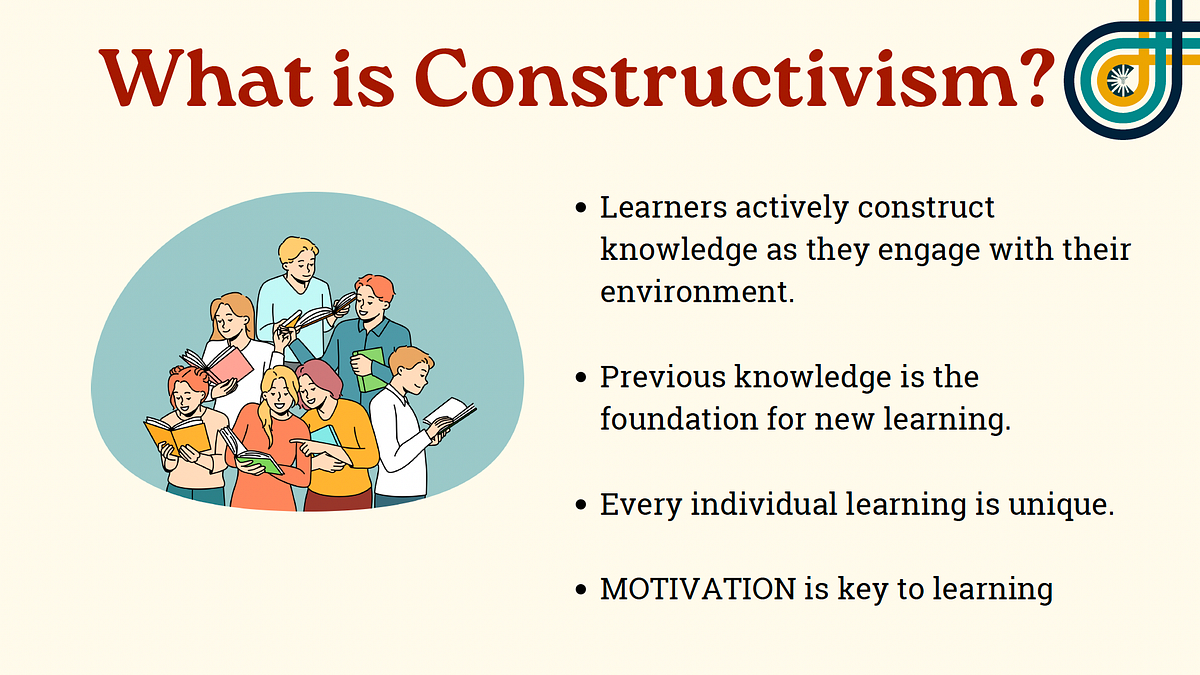
Constructivism is most suitable for higher education students facing academic pressure because it recognizes that stress is a personalized and subjective experience. Each learner has unique stress triggers, coping habits, and resilience levels due to differences in background, culture, and environment. By participating in interactive activities to identify personal stressors and develop personalized stress management plans, students not only absorb information but also actively reconstruct their understanding of resilience in a way that is more meaningful and applicable to their own lives.
Constructivism also encourages reflection and self-directed learning, which are central to this theme. This approach allows students to experiment, reflect on which methods suit them best, and adjust their strategies accordingly. This aligns with the goal of cultivating long-term resilience, as students learn to solve problems and apply coping skills in contexts beyond the classroom.
In terms of learning design, this learning resource combines project-based learning with inquiry-based learning, Project-based learning enables students to create a tangible product – a personalized stress management plan. This plan will directly address the real-life challenges that students face in their daily academic lives. Inquiry-based learning guides students to ask reflective questions. For example, What triggers my stress? Which strategies are most effective? Then, students seek their own answers through structured activities and peer sharing.
These learning design choices make learning not passive but experiential and reflective. Also, it is well-suited for the target learners, who are balancing academic demands with part-time work and social commitments. These learners often benefit from hands-on and flexible activities that they can adapt to their own routines. So this learning design respects their diverse needs.
Assessment Plan
The assessment strategy for this learning resource combines elements of formative and summative assessment to ensure that students receive support throughout the learning process.
Formative assessment will be integrated into each module to help students check their understanding and receive real-time feedback. For example, learners will complete a short Kahoot quiz after engaging with the instructional content to assess their mastery of stress concepts and resilience strategies. Additionally, learners will post reflections or lists of stress triggers on Padlet to receive supportive feedback from peers and gain insights into their peers’ perspectives. This can promote ongoing engagement, self-monitoring, and peer learning.
Summative assessment will be presented in the form of a personalized academic stress management plan. Each learner need to submit a structured document containing:
(1). A list of personal stress triggers
(2). Two coping strategies selected from the course content and applied
(3). A weekly schedule or action plan demonstrating how these strategies are effectively integrated into their lives.
This outcome reflects the project-based learning approach clearly demonstrating the integration of knowledge acquisition and practical application.
How the feedback will be provide?
Feedback will be provided through multiple ways:
- Peer review feedback: allow learners to share insights and provide mutual support.
- Instructor feedback: focus on the plan’s clarity, feasibility, and reflection of learning objectives.
- Automated feedback: give immediate correction and encouragement on quizzes.
Interactive Learning Activities
Activities 1: Understanding Academic Stress
Learning Objective: Identify at least three personal stress triggers related to academic life.
First, watch this short video that introducing the concept of resilience and the common stresses faced by university students.
Second, write a self-reflection exercise. Learners will complete a guided worksheet where list three specific stress triggers they personally experience. Then, classmates give the feedback to see if anyone else has similar sources of stress.
Activity 2: Designing a Personal Stress Management Plan
Learning Objective: Design a personalized academic stress management plan that is practical and sustainable.
- Watch this short video
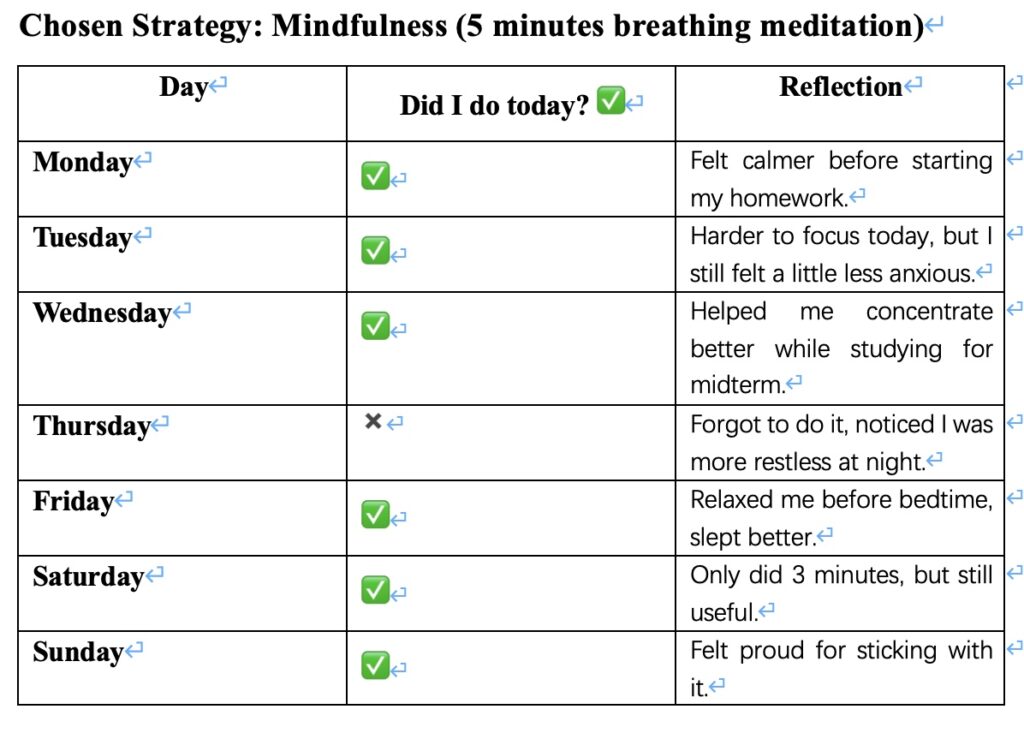
- 7-Day Resilience Challenge
- Learners commit to practicing at least one coping strategy daily for 7 days.
- They track progress using a checkboxes sheet with reflections. Here is the example.
Conclusion
Resilience isn’t built in a day — it grows through practice and reflection. By identifying your stress triggers, exploring new strategies, and completing your personal plan, you’ve taken meaningful steps toward managing academic stress with confidence.
Reference:
Turyamureeba, S. (2024). Building resilience in students: Strategies for coping with stress and adversity. Educational Review. https://www.eejournals.org/public/uploads/1725019214_b7ba1a739d6fb7a6d139.pdf#:~:text=Resilience%20in%20students%20is%20a%20crucial%20factor%20for,and%20the%20factors%20that%20contribute%20to%20its%20development.
Hou, D., & Yang, Z. (2024). Academic resilience and mental health: Understanding coping strategies. Journal of Educational Psychology.https://www.purdue.edu/stepstoleaps/new/featured/well-being-tips/2024_0401.php
AI use citation : ChatGPT (2025, August 20). Assisted in revising text and designing layout for the Interactive Learning Resource.
With Group member: Hoaxing Tu & Links (Huilin) Luo
The topic that we want to talk about is stress management and emotional regulation techniques for college-going youngsters.
Going to University is an exciting time of life — but it can also be very stressful. Whether it be the stress of academic deadlines, or managing part-time jobs alongside social lives, some students will feel pressurised at times which not only impacts on their mental health but can also hinder success in their studies. This interactive learning resource will help you to understand stress, identify your very own triggers, and give your tips on how to build resilience.
What you will get out of this resource:
- Find your biggest three personal stress triggers.
- Choose two mindfulness or time management strategies to use on academic tasks.
- Implement Your Own Individualized Stress-Reducer
These are evidence-based goals, designed to help you right away with the issues that are causing you distress (Lazarus & Folkman, 1984; American Psychological Association (2023).
Who Is This For?
Post-secondary students 18-25 years old, local and international; Stress, obviously, is not anything unfamiliar to you but probably you do not have a systematic form of managing it. Whether you are a student, working odd jobs or just looking to gain composure in your life, this course is for you.
We use video, infographics, and sound so that all can learn in interactive lessons which help those with certain needs.
Why This Approach Works
We believe in you connecting the dots, taking a constructivist path where new pieces are built on top of those you already know. Instead of sitting back and reading about stress, you will learn ways to reduce it and practice them, reflecting on what works or how the method can be improved for your lifestyle.
At the end of our project-based instruction, you will not only “know” about stress management—you will have a complete, actionable plan designed specifically for your unique lifestyle.
How We Designed for Everyone
In alignment with UDL and CAST principles, you will:
-Content | Videos, graphics, guides
Sharing your personal progress — writing, voice notes, discussing etc. •
- Tailor your choices (meditation, organizational skills, peer sharing).
Your Learning Journey
- Understand Stress
- View a video on the science of stress and resilience.
- Discover: A stress infographic on a survey of the top student triggers.
- Practice Strategies
- Experience: A brief, guided 5-minute mindfulness practice.
Takeaway: Download our free time-management planner and plan your week → • Take home message: download this high quality.QUENCY!
- Create Your Plan
- Map your unique stress triggers (Mind Mapping):.getActive with PonyPod Episode on Mind Mapping • 8 Active Listening Strategies for Enhancing Customer Service Experience:9.
- Prompt: Try a 7 day mindfulness challenge and write out your thoughts.
Share: Share you plan in small groups and get feedback
Assessment and Feedback
- Glance Assessments: Rapid noesis quizzes astatine the extremity of each module, positive equal feedback connected your plan.
Summative assessment: Turn in your final stress management plan (including triggers, strategies and timeline).
Evaluation: Pass/Fail based on whether or not Thought is complete, reflects deeply and realistically.
References
Lazarus, R. S., & Folkman, S. 1984. Stress, appraisal, and coping. Springer.
American Psychological Association. (2023). Stress in America 2023. https://www.apa.org
With Group member: Hoaxing Tu & Links (Huilin) Luo
This learning design blueprint explores the concept of resilience and effective coping strategies to manage academic stress.
What is Resilience?
Resilience means a person can stay positive and keep going when facing difficulties, stress, or failure. According to Turyamureeba (2024), psychological resilience is not a fixed trait, but a dynamic capacity that can be learned and strengthened over time. It’s like a spring inside when pressed, it can bounce back. A resilient person doesn’t give up easily and learns from tough experiences to become stronger. For example, if someone doesn’t do well on a test, instead of feeling sad for a long time, they try again with courage and effort.
However, resilience does not mean ignoring stress or pretending everything is fine; it requires you to identify your emotions and use healthy ways to cope. Many people think that resilience is a skill that people are born with. This is wrong. In fact, resilience is something that you can learn and cultivate later on.
Common Misunderstanding about Resilience
- Myth 1: Resilience is an innate trait you are born with.
- Some people may believe that resilience is an innate trait you are born with and cannot develop (Hou & Yang, 2024). However, resilience isn’t a personality trait- it’s a skill you can learn and strengthen with practice, just like time management or communication.
- Myth 2: Resilience always makes you stronger.
- While some stress can be motivating, constant high stress without rest or support can harm your mental health (Turyamureeba, 2024). Resilience is not about taking on endless pressure.
- Myth 3: Resilience is doing everything on your own.
- In reality, Resilience and seeking help often go hand in hand when facing adversity (Hou & Yang, 2024). Asking for help from friends, counselors, or instructors is a smart and resilient action – not a weakness (Turyamureeba, 2024).
Coping Strategies
How can we deal with stress in healthy ways?
There are several practical methods we can employ to develop resilience and cope with academic pressure. Two of the most useful ways are mindfulness and time management. Also, taking advantage of campus services help and creating a network support group are also integral to managing stress.
Mindfulness Practice:
Mindfulness is paying attention to the present moment, without judgment. It is what enables us to still our mind and emotion, especially in times of stress or anxiety. Here are some easy mindfulness exercises:
- Deep breathing: Spend a few minutes a day practicing slow, deep breathing. Count to four inhaling, hold, count to four exhaling.
- Body scan meditation: Slowly close your eyes and shift your focus to various parts of your body from your head to your toes. Focus on where you are holding tension and let it go.
- Mindful walking: Go for a very slow walk and really be aware of how your feet feel on the ground and how the air feels.
These could be used to ease your mind between classes. You can practice mindfulness at any time and don’t need any special tools. Spend five to ten minutes a day can b=help decreases stress and improve focus.
Time Management:
Many students are overwhelmed becase they fail to manage their time wisely. time management helps you take control of your schedule, and it can also helps to avoid stressful last minute preparations. Here are some time management tips:
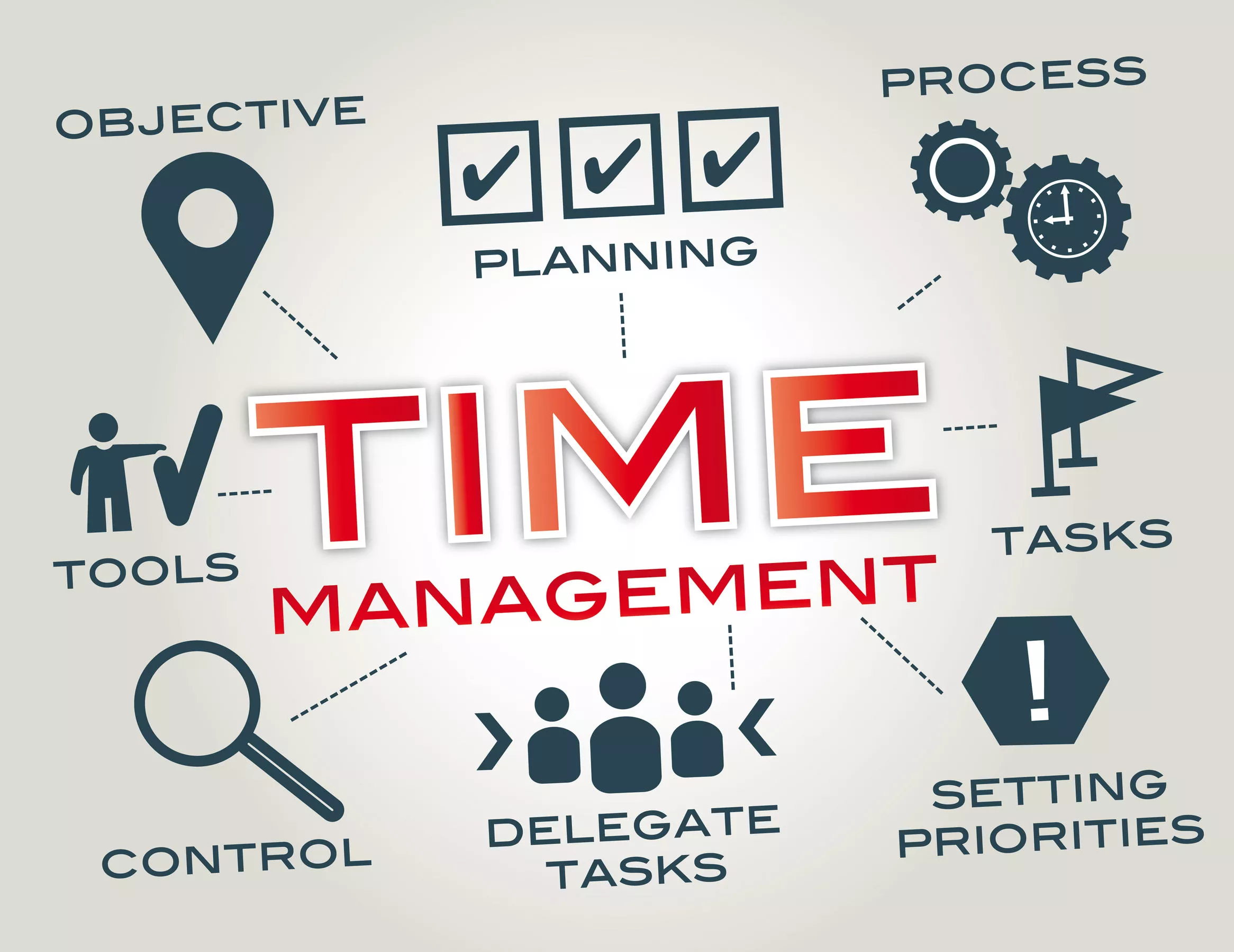
- Weekly Schedule: Write down all your classes or what you will do in this week, study time, meal and rest. It keeps you in the bulk of your time.
- Establish priorities: Use a To-do list and then mark that which thing is urgent, which is not. Finish the urgent thing first, and do rest later.
- Minimize distractions: Study in a quiet place, turn off your phone if you can.
Building Support Systems
You don’t have to manage your stress all by yourself.
Knowing where and how to obtain support is an important part of perseverance. Whether it’s talking to friends, visiting an academic advisor, or seeking professional counseling, your support system is crucial.
- Family: Keep in touch while studying overseas. Speaking with relatives can provide emotional support.
- Campus resources: Most colleges/ universities offer academic advisors, counseling and mental health services. Take advantage of these resources – they are free and valuable.
Build Your Personal Stress Management Plan
Now it’s your turn to build a plan.
You have learned what is resilience, discovered coping strategies, and identified your support network. So let’s bring everything together into your personal plan.
Use the worksheet point below to create your own Stress Management plan.
- What strategies work best for you?
- Who will you ask for when you need help?
- What daily habits will you use to stay your mental healthy?
Reference:
Turyamureeba, S. (2024). Building resilience in students: Strategies for Coping with Stress and Adversity. Eurasian Experiment Journal of Arts and Management. https://www.eejournals.org/public/uploads/1725019214_b7ba1a739d6fb7a6d139.pdf#:~:text=Resilience%20in%20students%20is%20a%20crucial%20factor%20for,and%20the%20factors%20that%20contribute%20to%20its%20development.
Hou, D. & Yang, Z. (2024). Debunk Common Myths About Resilience. Purdue University. https://www.purdue.edu/stepstoleaps/new/featured/well-being-tips/2024_0401.php
What concept did you find difficult to understand? How did you approach learning the concept?
One concept that I find difficult to understand is “confirmation bias“. We generally tend to believe what we want to believe and ignore or aviod things that challenge us or are different from the norm. When I first read about “confirmation bias” and watched the Veritasium video, I thought,”Yeah, that makes sense, other people do that too.” But I didn’t realize that I was doing the same thing.
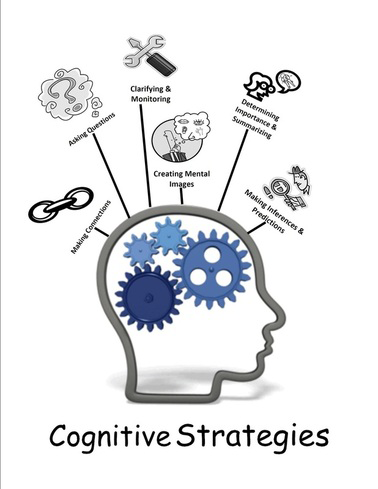
To learn this concept, I used some cognitivist strategies, like combined the new knowledge to what I knew before, and I tried to organize the information by making lists and comparing different opinions, so I could understand things better. Also, I had actual conversations with people who held different views, ask questions, and tried to acutally listen and understand their point of view rather than argue. Honestly, this kind of social interaction helped me break down my misconceptions.
Share a story about your best learning experience(could be a formal course or something more personal). Why did you enjoy it?
One of my best learning experiences was when I taught myself how to bake bread during the pandemic. At first, it was just curiosity, as I kept seeing videos of homemade cakes online and thought, “Why not give it a try?” But soon it became something I was deeply invested in.
What I love about this experience is that it combines action and reflection. I wasn’t just reading recipes, I was experimenting. Sometimes the cake was too wet, sometimes the oven temperature might have been high causing the body to be too dry, and sometimes the inside was soft. But every time, I will ask myself, what went wrong? Is there any ingredient that I put too much? Not enought temperature? Time and time again, through repeated attempts, I finally figured it out.
Why do I enjoy it? I think it’s because I can see and taste my progress. The motivation comes from the satisfaction that comes from progress.
Recent Comments